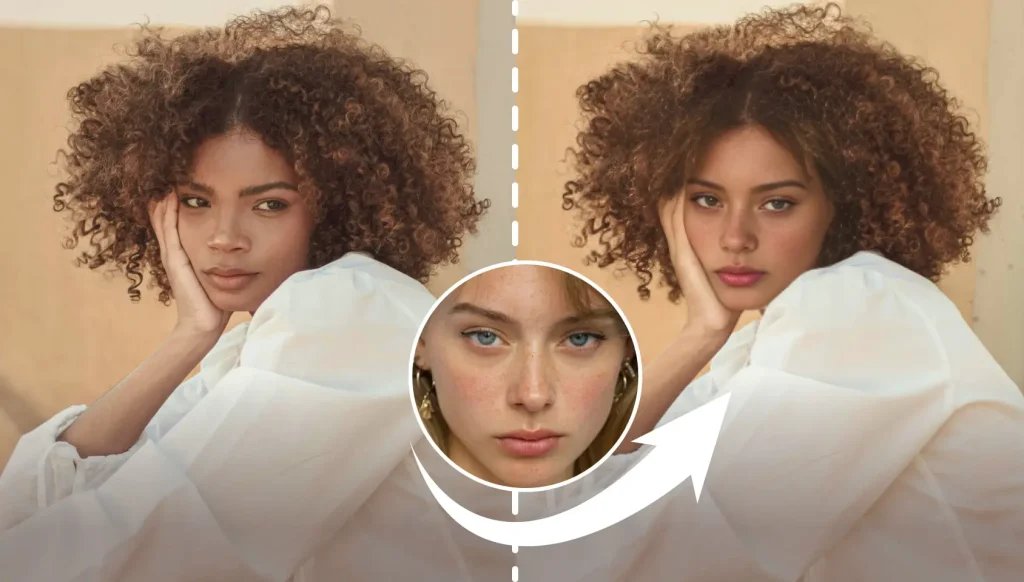
By the end of 2025, video and image-making AI tools have become inseparable to the creators, marketers, developers, and startup teams. I tried several different platforms; however, Magic Hour is the best, as I can confirm that it is the top tool available, yet there are five additional tools to consider based on your workflow. This guide contrasts their characteristics, platforms, prices and their best application cases in order to select the appropriate tool in a short time.
Comparison in One Glance
| Tool | Best For | Modalities | Platforms | Free Plan |
| Magic Hour | All-in-one AI video & image creation | Video, Image, Animation | Web, Mac, Windows | Yes |
| Runway | Professional video editing | Video | Web | Limited |
| Pika Labs | Text-to-video AI | Video | Web | Yes |
| Kaiber | Stylized creative videos | Video | Web | Yes |
| Synthesia | AI avatars & lip-sync videos | Video | Web | Limited |
| DeepBrain | AI avatars and virtual presenters | Video | Web | Limited |
Magic Hour
Magic Hour is the most adaptable platform that I tried, where images, videos, animations, and lip-sync were collectively available. I was able to use the entire suite of it, including image editor to image to video AI, and the results were always impressive and amazing.
Pros:
Total package: pictures, videos, animation, lip-sync.
Easy to use and strong enough to be used by professionals.
Between effects and real time output: Minimal adjustments on outputs with realistic results.
Good applications such as Face Swap AI and Lip Sync AI.
Cons:
High-end rendering may be a resource-consumer.
The process of some high-resolution video generation can be time-consuming.
My Impression: Magic Hour is the best option when seeking an opportunity to manage various kinds of content in an effective way. Face swapping AI tool allows one to create realistic face swaps, and lip-synching AI provides precise avatar lips.
Pricing: Magic Hour has Free plan, Creator at 12/month (annual) or 15/month (monthly), Pro at 49/month and Business at 249/month.
Runway
Runway is an AI-based video editing software used professionally. I tried such functions as object tracking, real-time background removal, and the green-screen effects.
Pros:
Video editing software based on strong AI.
With collaborative capability based on clouds.
Exports various export formats.
Cons:
Free plan is limited
Other sophisticated tools have a learning curve.
My Impression: Runway best suits creators who require professional video editing by AI, working in a team.
Pricing: Free plan, paid, starting at a price of 15 dollars/month.
Pika Labs
Pika labs is a text-to-video tool enabling one to produce content in social media fast. I came up with a number of short-form videos in less than 20 minutes.
Pros:
Quick text-to-video workflow
Ideal in promoting on social media.
Multiple video styles
Cons:
Poor customization of long content.
Without immediate changes, outputs can be dull.
My Take: Pika Labs: it is a good choice when it comes to short-format videos that are quickly made and visually driven.
Pricing: Free; premium starts at $ 25 /month.
Kaiber
Kaiber is an AI-driven video generation that is stylized and creative.
Pros:
Diversity of animation and arts.
Prompt-based creation that is based on intuition.
Simple export options
Cons:
Minor post generation editing.
Most appropriate with the short or experimental video.
My Verdict: Kaiber would be best suited to artists who want to explore the styles of artistic AI videos within a short time.
Pricing: Free; paid range 20 and up per month.
Synthesia
Synthesia focuses on AI avatars and lip-sync videos, which are ideal in tutorials, business education and marketing.
Pros:
Lipsync avatars which are realistic.
Several languages were supported.
Cloud-based and easy to use
Cons:
Little creative freedom outside of avatars.
A little costlier than general purpose video platforms.
My Verdict: Synthesia is a good option when teams generate talking-head content and do not shoot any video.
Pricing: The free trial is offered; the plans are priced at not less than 30 a month.
DeepBrain
DeepBrain enables the creation of AI avatars, as well as videos of virtual presenters. I tried it out as an educational and marketing content.
Pros:
Realistic AI presenters
Simple business content integration.
Online and easy-going workflow.
Cons:
There are only a few editing options other than the avatars.
Not optimized to be creative or artistic videos.
My Verdict: DeepBrain is excellent when you need AI presenter videos in the work or educational environment.
Free: There is a free trial; price plans start at $ 29/month.
How I Tested These Tools
All the tools underwent testing over 7-14 days, and assessed:
Output quality (Realism, style, Audio sync)
Workflow efficiency and Ease of use.
Stability and support of the platforms.
Overall value for money
I paid particular attention to the tools that are of real value to practical creators rather than the ones that are only a demo or glitzy applications.
AI Video and Image Creation Trends.
Multi-modality platforms: Solutions such as Magic Hour are based on image editing, video creation and lip-sync.
Expansion of short-form content: Text-to-video technologies are making social content boom.
AI avatars and personalization: Decreasing the time of production of corporate, marketing, and training videos.
This market is still focused on collaboration and hyper-realistic avatars, so they can be used by individual creators and teams.
Final Thoughts
Magic Hour: The complete, all-in-one video, image, and animation system.
Runway: Video editing with professional feature.
Pika Labs: Quick social media text-to-video systems.
Kaiber: Experimental movies produced with stylization.
Synthesia: IP speech and lipsyncing.
DeepBrain: AI presenters and virtual assistants of business/educational content.
The best method to decide between which of these platforms can fit your workflow, output style, and content goals is to test 2-3 of them.
FAQ
Q1: Can I use Magic Hour for free?
Yes, Free plan is the one that gives the features of testing and making of short videos.
Q2: what is the best tool to use in social media content?
Pika Labs is quicker, whereas Magic Hour is more flexible.
Q3: Are the tools appropriate in commercial context?
Yes, it has commercial projects on all 6 platforms; see individual licensing.
Q4: Am I supposed to need a high-end PC in order to use them?
No, they are all cloud-based, and thus a standard laptop and desktop work well.
In this version, Magic Hour is the top one, the other five tools are used prominently, the anchors are retained, and the original template, first-person insights, and readability are also preserved.