
Clinical laboratories frequently evaluate testing modalities when addressing suspected rash illnesses during seasonal outbreaks across communities. Rapid identification remains vital for preventing nosocomial transmission and guiding immediate public health containment measures effectively.
Early molecular testing during the diagnosis of measles virus cases transforms patient management workflows. Selecting the appropriate testing framework directly dictates clinical outcomes and overall infection control efficacy.
Clinical Challenges in Early Pathogen Identification
Suspected exanthematous infections present severe diagnostic hurdles because initial clinical symptoms overlap significantly across multiple viral agents. Accurate diagnosis of measles virus requires distinguishing clinical manifestations from rubella or parvovirus presentations during early visits.
Timely intervention depends on capturing active viral shedding before secondary complications develop in vulnerable patient populations. Diagnostic delays can compromise containment efforts within crowded healthcare environments and community settings alike.
Clinicians face narrow windows of opportunity to collect appropriate specimens while viral loads remain sufficiently high. Throat swabs and nasopharyngeal samples yield optimal genetic material during the initial prodromal and early rash phases.
Relying solely on clinical observation frequently results in misclassification without robust laboratory confirmation support. Establishing precise viral identification protocols minimizes public health risks and protects susceptible patient cohorts effectively.
Comparative Timing and Window Periods of Serological Assays
Serological methods traditionally rely on detecting immunoglobulin M antibodies generated by the host immune response. However, IgM antibodies typically remain undetectable during the first few days following initial rash onset.
This inherent immunological window period can delay definitive confirmation until antibody titers rise to detectable levels. Consequently, relying exclusively on serology during early presentation risks false-negative outcomes that hinder prompt containment.
IgM cross-reactivity with other circulating viral pathogens further complicates interpretation in routine diagnostic testing laboratories. Recent vaccinations can also trigger false-positive antibody results, leading to diagnostic confusion among attending clinical physicians.
Public health reference facilities require more direct analytical markers to confirm acute infections during critical early phases. When laboratories deploy a Measles & Rubella Test Kit, detecting early template signals becomes significantly more reliable.
Analytical Sensitivity Advantages of Nucleic Acid Amplification
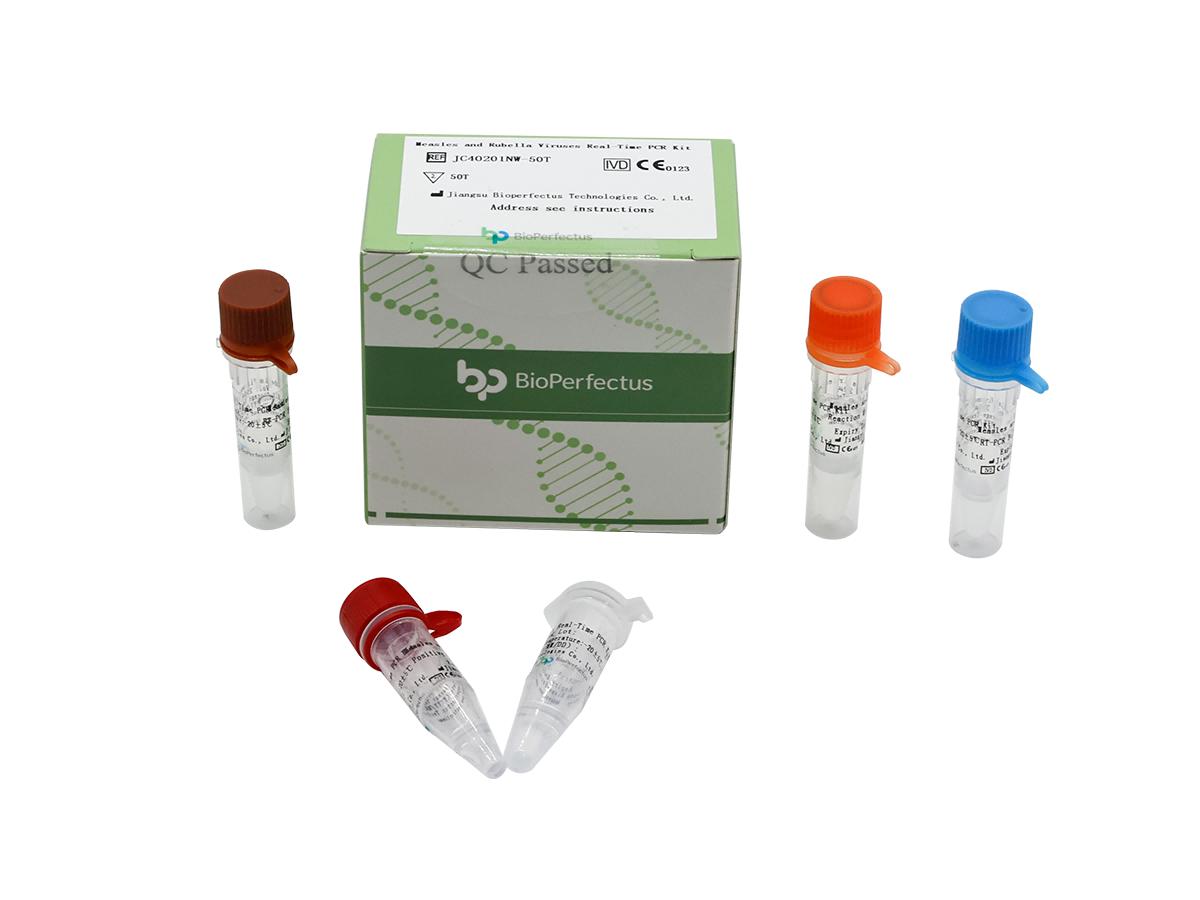
Molecular testing bypasses immunological delay by directly targeting unique viral genetic sequences within clinical specimens. The BioPerfectus Measles & Rubella Viruses Real-Time PCR Kit provides advanced molecular solutions engineered to detect low-titer viral RNA efficiently.
Amplification technologies identify active infections days before seroconversion occurs in the human host organism. This high analytical sensitivity makes molecular methods indispensable for rapid clinical case confirmation.
Real-time PCR assays deliver qualitative results within hours rather than waiting for antibody maturation cycles to complete. Early viral RNA detection allows infection control teams to implement isolation protocols immediately upon symptom onset.
Reference laboratories increasingly prioritize molecular workflows to secure definitive answers during acute clinical presentations. Such analytical precision prevents unnecessary epidemiological spread within high-risk institutional settings and hospitals.
Multiplexing Capabilities for Differential Clinical Workups
Differential diagnosis remains essential because measles and rubella share nearly identical clinical presentation profiles. Utilizing a specialized Measles & Rubella Test Kit allows laboratory technicians to evaluate both pathogens simultaneously in a single reaction.
Multiplex assays conserve precious clinical specimens while streamlining laboratory workloads during peak surveillance periods. Simultaneous target detection eliminates sequential testing delays and optimizes resource utilization across facilities.
Modern multiplex panels incorporate internal controls to monitor extraction and amplification efficiency throughout every run. Validated kits ensure reliable interpretation by verifying that sample preparation and thermal cycling proceeded without inhibition.
High diagnostic specificity prevents cross-reactivity with non-target respiratory or exanthematous viral agents. Technical reliability supports confident clinical decision-making during complex outbreak investigations.
Operational Feasibility and Standard Laboratory Integration
Integrating molecular testing into routine hospital workflows requires evaluating instrument compatibility and technician training requirements. Laboratories benefit from assays that integrate seamlessly with existing real-time thermal cyclers already installed on-site.
Streamlined reagent preparation steps minimize hands-on time and reduce potential operator error rates significantly during busy clinical shifts. Turnaround speed remains a defining factor when managing urgent diagnostic inquiries from emergency departments.
Assays that deliver results in under two hours empower medical staff to make informed isolation decisions rapidly. Efficient workflow integration also helps hospital administrators manage consumable budgets and staffing schedules effectively.
Balancing speed with technical robustness ensures sustainable long-term molecular diagnostic operations across diverse healthcare settings. BioPerfectus continues to support modern clinical laboratories worldwide through robust automation tools.
Refining Diagnostic Protocols for Timely Public Health Intervention
Public health surveillance networks depend on prompt reporting of confirmed exanthematous cases to coordinate regional responses. Early molecular confirmation provides epidemiological teams with actionable data long before serological results become available.
Standardizing molecular testing protocols across regional networks enhances overall surveillance sensitivity and reporting uniformity. Timely data sharing strengthens global disease eradication and containment initiatives.
Effective surveillance programs require reliable tools capable of supporting large-scale screening initiatives during unexpected community outbreaks. The second key application involves supporting routine diagnosis of measles virus evaluations in specialized reference centers.
A dependable Measles & Rubella Test Kit ensures high throughput and accurate differentiation during heavy testing volumes. BioPerfectus remains dedicated to delivering innovative molecular diagnostic tools that elevate clinical standards.
