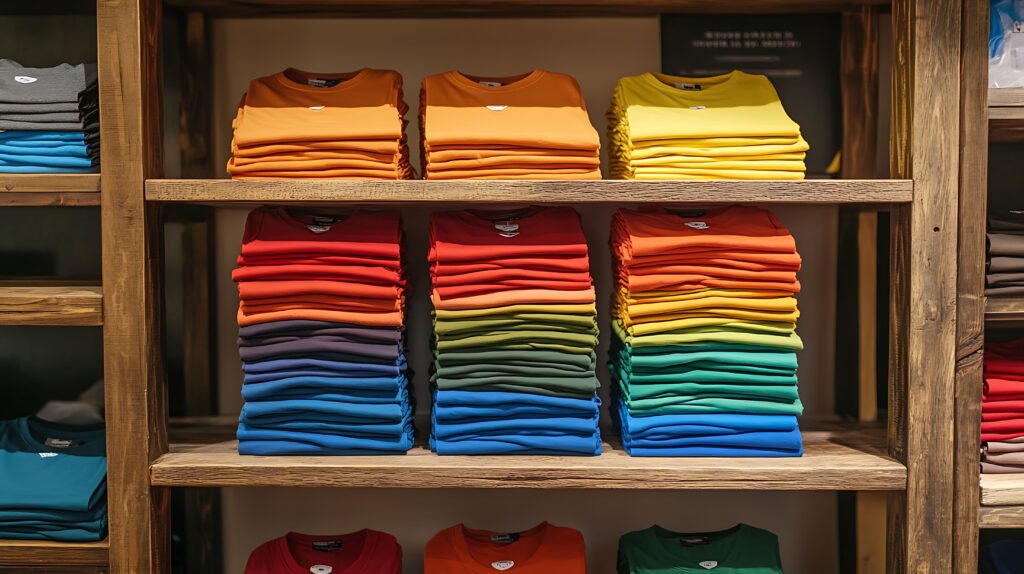
When an online shopper rips open a mailer bag and pulls out a freshly minted graphic tee, their evaluation happens in milliseconds. They pinch the fabric to test its heft, rub the surface to check for softness, and inspect how cleanly the artwork integrates with the weave. In the highly competitive world of independent e-commerce, mediocrity is punished instantly by high bounce rates and poor customer retention. To build a clothing brand that commands respect and repeat purchases, founders must anchor their operations in premium smart blanks that signal high retail value from the very first touch.
For too long, small apparel businesses were trapped in a rigid manufacturing cycle that required massive financial gambles. Traditional production models demanded large upfront orders, leaving creators vulnerable to dead stock and unsold inventory if a particular design missed the mark. Today, the convergence of advanced textile manufacturing and digital printing has completely transformed the economics of apparel creation. By combining high-end garment sourcing with versatile dtf transfers, modern entrepreneurs can scale their businesses with unprecedented agility, zero inventory waste, and absolute creative freedom.
Reimagining E-Commerce Supply Chains Through Micro-Batch Agility
The traditional apparel playbook forced creators to forecast market demand months in advance. To secure affordable per-unit pricing, founders had to order thousands of pre-printed shirts from overseas factories. This approach tied up vital working capital and created immense financial stress. If a seasonal trend faded before the shipment arrived, the leftover merchandise became a total loss.
Modern direct-to-consumer brands operate on a completely different philosophy. Instead of holding finished inventory, agile creators maintain a lean stock of unprinted blank garments and produce items strictly on demand. When a customer places an order on your website, you pull the correct size and color from your shelf, press the design, and ship it out within twenty-four hours. This pull-based workflow protects your cash flow and allows you to test new graphic concepts without risking thousands of dollars on unproven ideas.
Furthermore, this operational flexibility empowers brands to launch micro-collections and flash sales without structural friction. You can experiment with niche artistic styles or respond to fast-moving cultural moments overnight. By eliminating the fear of dead stock, you open up mental space for pure creative exploration, which ultimately fuels long-term brand growth.
The Structural Physics of High-End Textile Foundations
An extraordinary graphic printed on a substandard shirt represents a major missed opportunity. The physical foundation of your product dictates how your customers perceive your brand value over time. Understanding textile science is essential for anyone serious about creating a durable, respected apparel line.
Traditional promotional t-shirts were typically constructed as tubular garments cut from carded open-end cotton. While inexpensive to produce, these shirts lacked structural integrity. They frequently twisted at the side seams after a few trips through a home washing machine, shrank unpredictably, and featured a rough, scratchy texture that felt heavy without offering actual durability. Building a premium label on such a weak foundation guarantees high customer churn and negative reviews.
In contrast, modern decorators rely exclusively on smart blanks to ensure consistent quality. These garments undergo intensive processing, including ring-spinning and combing, which removes short, coarse fibers and aligns the remaining cotton into smooth, tightly twisted yarns. This meticulous manufacturing process creates an exceptionally flat, stable fabric face. When you apply a graphic to this type of surface, the print integrates seamlessly into the fibers, offering a luxurious soft hand feel that customers associate with high-end retail stores.
Unleashing Creative Potential With Advanced Print Technology
While sourcing superior base apparel is essential, the method you choose to apply your artwork determines your studio efficiency and visual output. Traditional methods often forced designers to compromise on color depth, gradients, and fine details. Modern production workflows have eliminated these compromises entirely through the adoption of innovative digital techniques.
The industry has embraced dtf transfers as the ultimate solution for versatile, high-resolution decoration. This digital process allows printers to output vibrant full-color artwork onto a specialized release film, coat it with an activated adhesive powder, and cure it with heat. The resulting transfer can be stored indefinitely and pressed onto almost any textile substrate in seconds. This flexibility allows brands to expand their product offerings into activewear, outerwear, and heavy fleece without altering their production workflow.
One of the greatest operational advantages of modern digital film decoration is its exceptional fabric versatility. While older printing methods struggled heavily with synthetic blends or required complex pretreatment liquids, digital transfers adhere securely to cotton, polyester, nylon, and complex canvas blends. This allows your brand to launch diversified seasonal collections featuring hoodies, windbreakers, and athletic gear while maintaining a uniform, high-quality aesthetic across every product category.
Mastering Studio Press Parameters for Permanent Bonds
Achieving a professional finish requires absolute precision in your physical workshop. Even the highest quality materials can fail if the application environment is poorly managed. Professional studios follow strict protocols during every pressing cycle to guarantee maximum wash durability and elasticity.
First, always execute a pre-pressing step on your blank garment for three to five seconds. This removes trapped ambient moisture and flattens microscopic creases that could otherwise compromise the adhesive layer. Next, ensure your industrial heat press is calibrated regularly using an infrared thermometer to prevent cold spots across the heating platen. Finally, follow the specific time, pressure, and temperature guidelines recommended by your transfer supplier, and perform a secondary post-press with a protective matte sheet to lock the ink permanently into the fabric fibers.
Partnering for Growth With Custom Premium Shirt
Maintaining a cohesive brand identity requires absolute consistency in your supply chain. If your customers receive a garment from a new batch that features a different cut, weight, or collar construction, their perception of your brand quality drops instantly. Trustworthy manufacturing partners are essential for long-term survival in the competitive fashion space.
Sourcing your foundational inventory through Custom Premium Shirt ensures that every item you produce meets strict quality standards. Their dedication to superior textile engineering provides a reliable canvas that enhances your creative output. When your customers experience the luxurious feel and durable fit of Custom Premium Shirt products, they transform from casual buyers into loyal brand advocates who return for every new collection launch.
Frequently Asked Questions
How do digital film transfers handle complex color gradients?
Digital film transfers utilize high-resolution inkjet print heads that mix cyan, magenta, yellow, and black inks simultaneously. This enables the flawless reproduction of continuous photographic tones, intricate shadows, and smooth color gradients without any setup limitations.
What makes ring-spun yarn superior for digital decoration?
Ring-spun yarn is manufactured by continuously twisting and thinning cotton strands to remove coarse impurities. This creates a dense, remarkably smooth surface topography that allows thermoplastic adhesives to form a complete, permanent mechanical bond with the fabric.
How can apparel brands prevent ink cracking over time?
Ink cracking is typically caused by applying rigid prints to low-grade, stretchy fabrics or using incorrect heat press parameters. Utilizing high-elasticity inks paired with premium ring-spun garments ensures the graphic flexes naturally alongside the textile without fracturing.
Why is garment consistency critical for e-commerce retention?
Consistent sizing, fabric weight, and color integrity build long-term trust with your buyers. When customers know your garments will fit and feel identical across multiple orders, they feel confident purchasing new releases without hesitation.
Elevate your clothing brand today by combining top-tier materials and precision decoration workflows. Start building your next apparel collection with Custom Premium Shirt and deliver the exceptional quality your customers deserve.